Introducing Spark Subtask Agents
How Spark scales AI for enterprise sourcing
Every AI agent starts simple. A single prompt, one use case, impressive results in a demo. Then reality arrives: more document formats, more supplier data, more complex sourcing events, more edge cases. The instinctive fix is to add more instructions to the same prompt - and that's exactly where things start to break. As instructions pile up, the model gets confused, accuracy drops, and responses slow down.
The industry has a name for this: context rot.
At Archlet, we hit this ceiling early. And we built past it. That’s why we've introduced Subtask Agents, an orchestration architecture inside Spark, our AI agent for sourcing. Instead of one agent trying to hold everything in its head, Spark delegates specialized work to focused sub-agents, each with only the instructions, tools, and context it needs.
Moving beyond the monolith
A monolithic AI agent is like asking one buyer to simultaneously read every supplier document, validate every bid sheet, remember every past conversation, and negotiate. All at once. Without notes. It works for small RFPs. It doesn't work at enterprise scale, where a single RFP can involve dozens of suppliers, thousands of line items, and hundreds of pages of supporting documents.
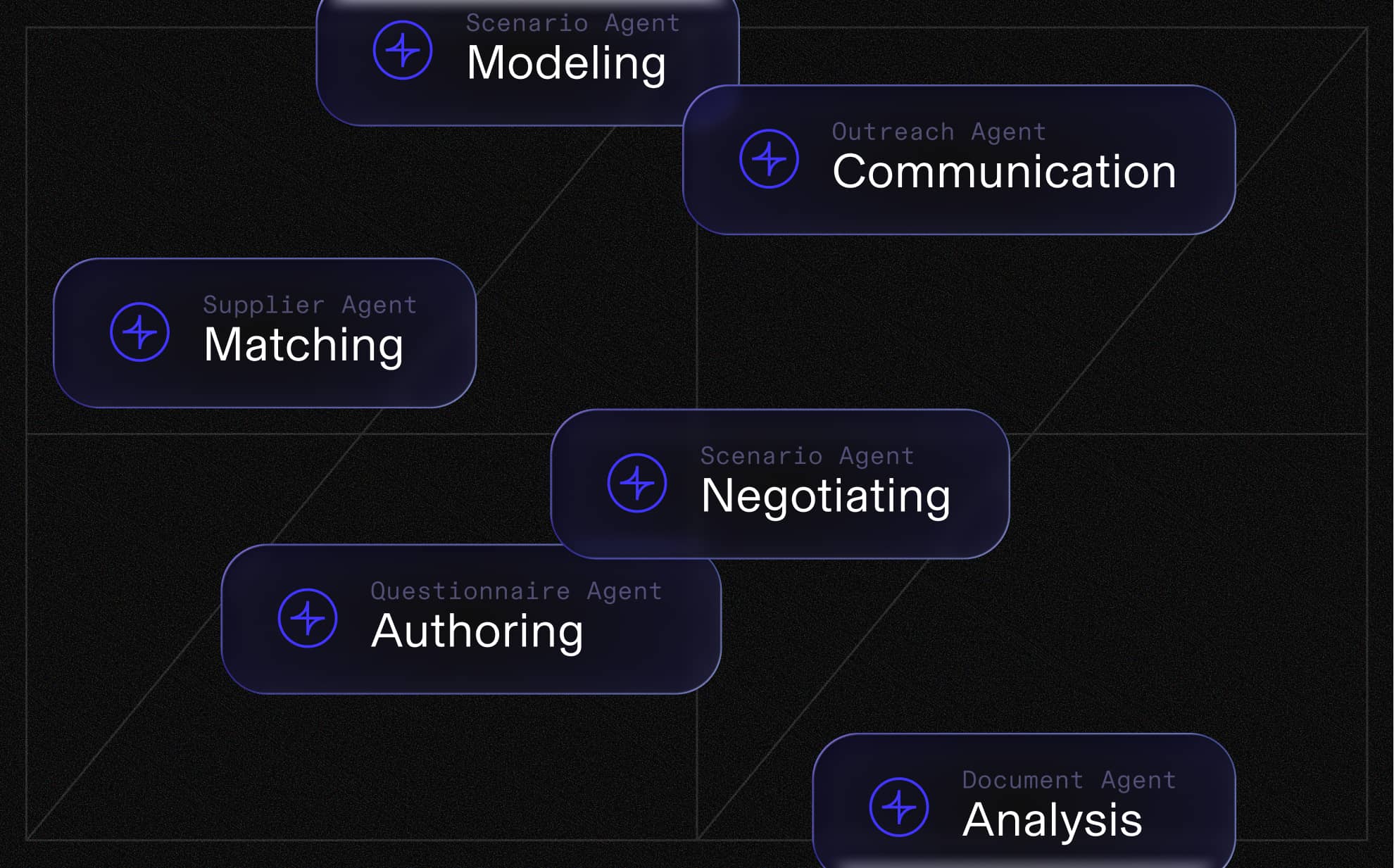
Subtask Agents break this work apart. Think of it as a team of specialists rather than a single generalist: Spark stays in charge of the conversation and the overall task and interaction with the sourcing teams, while dedicated sub-agents handle well-defined pieces of the job in the background. And those specialists don’t wait in line – Spark can send many of them out at once, working through your event in parallel. Each sub-agent sees only what's relevant to its task, which keeps it fast, accurate, and easy to improve independently - when we sharpen one sub-agent, everything built on it gets better without touching the rest.
What this looks like in Spark today
Three examples of this architecture in Archlet Spark:
Project creation. Setting up RFx events means questionnaires, bid sheets, and more. Spark orchestrates specialist agents for each – every piece built by a dedicated sub-agent and assembled into one ready-to-review event.
The document-analysis sub-agent. Submitted supplier documents are where sourcing complexity lives - technical specifications, certificates, annual reports, pricing annexes, contracts, all in different formats and languages. When Spark needs to understand a document, it hands the job to a sub-agent built for exactly that. The sub-agent digests the full document in isolation and returns only the structured insights Spark needs, so a 200-page annual report or proposal never clogs up the main conversation. You get precise answers about your bids and proposals without the reliability penalty of stuffing everything into one context.
Conversation compaction. Sourcing events aren't one-question interactions. You work with Spark across the event setup, bid and proposal analysis, award scenarios, and negotiation, often over days or in some cases even weeks. Long conversations are precisely where monolithic agents degrade. Spark now intelligently compacts its conversation history, preserving decisions, constraints, and key facts while shedding the noise. The result is an agent that stays sharp on message fifty the way it was on message one.
Why architecture matters for procurement
Procurement teams don't need an AI that's impressive in a demo. They need one that's reliable over thousands of RFPs, with real supplier data, under real deadlines. And that's an architecture problem, not a prompting problem.
- Focus: Each sub-agent works with a clean, narrow context, which directly improves accuracy.
- Speed: Less context passed around and sub-agents running in parallel means faster responses, even on large events.
- Composability: New capabilities become new sub-agents, so Spark can grow in scope without growing in fragility.
- Reliability under volume: The same accuracy whether you check 3 certificates or 30.
For you, none of this machinery is visible. And that's the entire point. You still have one conversation with one Spark. What changes is what's underneath: an agent that keeps its footing as the sourcing events get bigger, the submitted documents get longer, and your questions get harder.
A foundation for what's next
Subtask Agents aren't a feature; they're how we build agentic AI at Archlet. This same architecture powers the next generations of Spark, with sub-agents owning specific tasks and stages of the sourcing process; across tactical, tail and strategic spend.
The ambition behind Spark has always been to remove the routine work from sourcing so procurement teams can focus on strategic work such as managing supplier relationships. Subtask Agents are what make that ambition hold up at enterprise scale.
Want to see Spark's Subtask Agents on your own sourcing data? Get in touch with us to learn more about Archlet Spark here.
.png)

