What AI native really means for sourcing technology

The shift to AI-native sourcing technology
The phrase “AI native” is used a lot these days, and many people feel tired of hearing it. The early hype might be slowing down, but the technology itself is not going anywhere. What matters now is understanding which tools are truly built around AI and which ones simply add AI on top of old systems.
What AI native really means for sourcing
Many solutions claim to use AI, but they all mean something different. A simple way to understand this is to look at three levels of AI adoption.
AI first
A company says AI is important and plans around it. The product itself, however, may still follow traditional workflows.
Embedded AI
This is the most common model. AI features are added into an existing product. They help with specific tasks, but the overall experience stays the same. It is like adding a chatbot or a summarizing tool without changing the underlying process.
AI native
This is completely different. AI is not a feature. It is the starting point for the entire product. The workflows, data model, user experience, and architecture are all designed with the idea that an intelligent agent performs parts of the work. It can be compared to the shift from on-premise systems to cloud native systems. You cannot just “add the cloud” to an old tool. You need to design the whole product differently. The same applies to AI-native systems.
In simple terms: AI first is a strategy. Embedded AI is a feature. AI native is a product built around AI.
This last category is where real change happens, and it is how Archlet was built.
Why Archlet is an AI-native sourcing platform
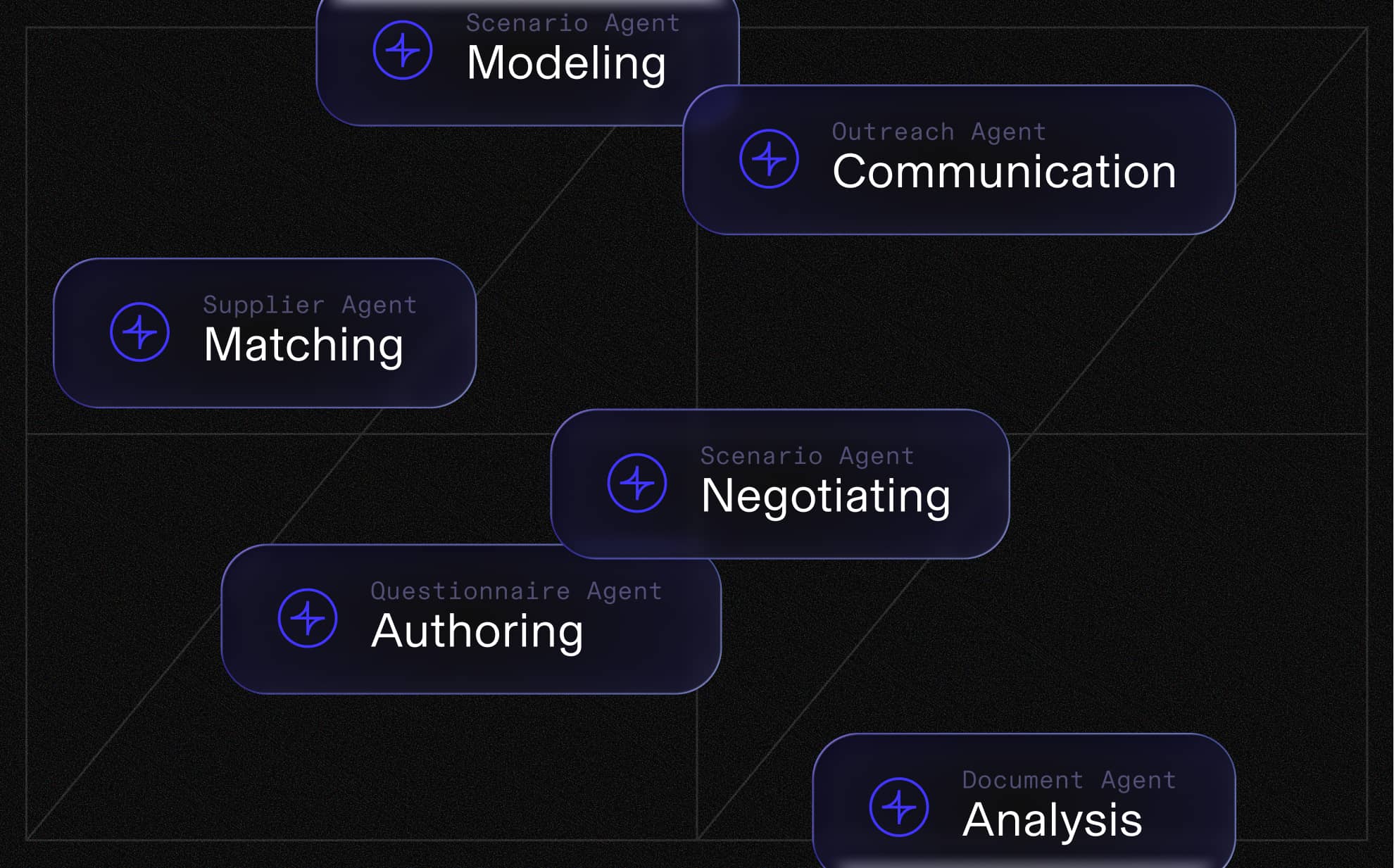
Archlet designed its platform around AI from the beginning. With Spark, our AI agent, we started building AI use cases in 2021. Spark takes over parts of the user’s work across complex strategic sourcing, tactical events, and tail spend.
For complex sourcing, Spark helps set up projects, design bid sheets, build and refine questionnaires, re-use templates, generate scenarios from free text, extract data, evaluate bids, detect outliers, summarize RFI responses, score answers, and create structured overviews that support faster negotiations.

For smaller RFPs and tail spend, Spark can automate the entire process. Users describe the ideal result and award criteria, Spark creates the event, and the user steps in only when needed.
Because Archlet was built around AI from day one, the platform can take full advantage of the latest progress in AI. This enables simpler user flows, less manual work, faster cycle times, and guided insights that older systems cannot deliver.
A modern foundation for smarter sourcing
AI-native tools need the right architecture. Agentic systems depend on continuous and secure data flow across systems. This is why integrations and APIs are a core part of Archlet. They bring decision-relevant data directly into Spark so the agent can take action instead of only analyzing information.
This also explains why older sourcing platforms cannot simply “add AI” and get the same results. Many were not built for flexible data movement, which limits what AI can do in the product.
Archlet redesigned the sourcing flow around AI. Spark reads PDFs, Excel files, and other formats that suppliers already use, extracts and structures the data, compares bids, and creates award recommendations automatically. This speeds up adoption because suppliers do not need to change their behavior.
.gif)
The AI-native advantage for organizations
Teams that use an AI-native solution see benefits that increase over time. They get:
- Technology that improves automatically as AI evolves.
- A sourcing experience that delivers efficiency levels older tools cannot match.
- More time for decisions and collaboration instead of admin tasks.
The next chapter of procurement will be driven by tools built around AI from the start. AI native will not be a buzzword. It will be the difference between staying where things are and moving ahead. And over time, the label will disappear because the leading solutions will all be AI native by design.
.png)